Utah Backcounty
Utah mountains are home to incredible backcountry terrain. Dramatic peaks, inspiring lines and untouched fields of The Greatest Snow on Earth® beckon from beyond the resort boundaries. It's no surprise backcountry skiing and snowboarding are experiencing a surge in popularity. Whether you're heading into the highest peaks of the Wasatch and Uinta Mountains or exiting through the gates to access powder stashes just outside resort boundaries at one of the state's 15 resorts, there are myriad ways to experience the thrill of backcountry skiing and snowboarding in Utah. Backcountry travel, however, carries inherent risk due to uncontrolled snow and avalanche conditions, so it's essential to prepare with the proper knowledge and equipment to safely travel in the backcountry. The Utah Avalanche Center (UAC) is a wonderful resource for skiers and snowboarders to equip themselves with the education and daily avalanche reports needed to safely ski and snowboard in the Utah backcountry.
Today's Avalanche Forecast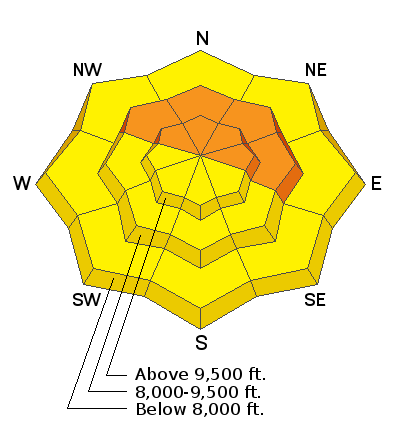 |
If the image to the left looks unfamiliar to you, take a moment and look over the UAC's forecast tutorial. Learn how to read the avalanche forecast |
Backcountry skiing and snowboarding can be dangerous if you aren't prepared with the right knowledge and equipment. All backcountry terrain—whether that's the highest, steepest peak in the range or a benign-looking slope just beyond the rope line—poses a risk because snow and avalanche conditions aren't controlled. Every skier and snowboarder who ventures into the backcountry should have the requisite education and skills to safely travel in avalanche terrain and perform an avalanche rescue. At a minimum, this entails reading and understanding an avalanche forecast, choosing appropriately safe backcountry terrain and effectively using avalanche rescue gear (beacon, shovel, probe).
If that sounds daunting, fear not. The UAC offers everything from the essential introductory Know Before You Go online program to avalanche rescue clinics to professional-level forecasting courses. Ski Utah has an entire page devoted to helping understand and plan your avalanche safety education along with some tips about differentiating between backcountry and resort terrain as well as about packing the proper essential gear.
Backcountry Access and Uphill Policies at Utah Resorts
Some of Utah's resorts offer backcountry access through gates at the resort boundary. Some also offer uphill access within resort boundaries for skiers and snowboarders who want to earn their turns. Please remember backcountry terrain accessed via resort gates is uncontrolled and requires the same respect, education and gear as all other backcountry areas. Always double check with resorts regarding current uphill and backcountry access policies before heading out.

| Resort | Uphill Travel Allowed? | Backcountry Access Gates? | More Information / Uphill Policy Details |
|---|---|---|---|
| Alta | Yes, with restrictions | Yes | details |
| Beaver Mountain | Yes, with restrictions | Yes | details |
| Brian Head | No | Yes | details |
| Brighton | Yes, with restrictions | Yes | details |
| Cherry Peak | Yes, with restrictions | No | details |
| Deer Valley | No | No | details |
| Eagle Point | Yes, with restrictions | Yes | details |
| Nordic Valley | Yes, with restrictions | No | details |
| Park City Mountain | Yes, with restrictions | Yes | details |
| Powder Mountain | Yes, with restrictions | No | details |
| Snowbasin | Yes, with restrictions | Yes | details |
| Snowbird | No | Yes | details |
| Solitude | Yes, with restrictions | Yes | details |
| Sundance | No | No | details |
| Woodward Park City | No | No | details |
Guided Services
You don't have to go it alone in the Utah backcountry. There are numerous guided services and experiences you can choose from depending on your experience level, budget and goals. These range from helicopter skiing and snowboarding in the Wasatch to lift-assisted backcountry tours between resorts to human-powered adventures in the Uinta mountains and everything in between.
- Ski Utah Interconnect Tour
- Park City Powder Cats
- Snowbird Mountain Guides
- Powder Mountain / Cats / Touring / Inbounds
- Powderbird Heli Skiing and Snowboarding
- White Pine Touring