A Utah powder day has a lot to love: first chair, fresh powder, unforgettable mountain views, and, of course, the après scene. But Utah’s ski industry does more than provide bragging rights for powder hounds. According to a 2025 report from the University of Utah’s Kem C. Gardner Policy Institute, skiing and snowboarding are also a major economic engine for the state. One that keeps cash flowing through hotels, restaurants, retail shops, and communities long after the last run of the day.
During the 2024–25 ski season, Utah welcomed a combined 6.5 million skier days, with skiers and snowboarders spending a whopping $2.51 billion throughout the state. That works out to an average of $306 spent per skier or snowboarder per day, covering everything from lift passes and equipment rentals to meals, lodging, transportation, and après-ski activities.
And that spending doesn’t stop at the slopes.
Think about a typical ski trip: You might grab coffee before heading up the canyon, rent skis, stop for lunch at the resort, grab dinner in town, and spend the night at a hotel or short-term rental. Each purchase sends a little more of that ski-day stoke into the broader economy.
In fact, 72% of Utah skiers and snowboarders stayed in paid accommodations during the 2024–25 season, with the average visitor staying 6.4 nights. That means the economic impact of a ski vacation extends well beyond the hours spent riding lifts. Hotels, restaurants, transportation companies, retailers, and other local businesses all benefit from visitors who come to Utah for the legendary snow.
The industry also draws visitors from far beyond Utah’s borders. During the 2024–25 season, 43% of skiers and snowboarders were Utah residents, while the remaining visitors came from across the country and around the world. California accounted for 9% of visitors, while 32% came from elsewhere in the U.S. and 3% were international visitors. That means more than half the riders on the mountain crossed state lines to experience a Utah ski day.
Those visitors bring fresh revenue into Utah communities, and the ski industry helps turn that revenue into jobs. The 2024–25 season supported 31,800 direct jobs, including positions at ski resorts, as well as employment throughout the broader recreation and hospitality industry.
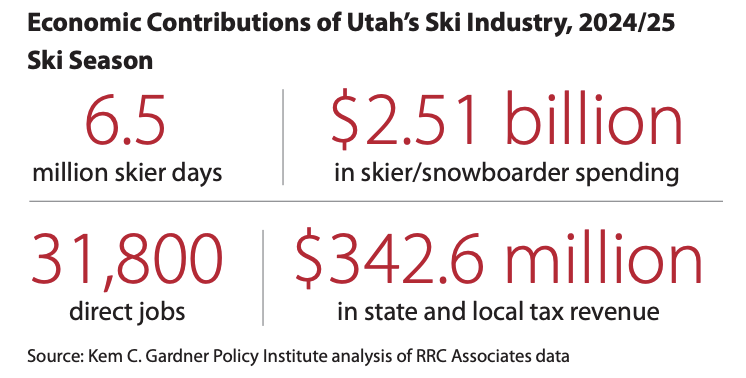
Then there’s the tax revenue. During the 2024–25 season, Utah’s ski industry generated an estimated $342.6 million in state and local tax revenue. In other words, every time someone buys a lift ticket, books a room, grabs dinner, or rents a snowboard, a portion of that economic activity ultimately helps support public services across the state.
Of course, none of this diminishes what makes Utah skiing special in the first place. The snow is still the star of the show. With 15 ski resorts, including the nation’s largest ski resort, and 10 resorts located less than an hour from Salt Lake City International Airport, Utah’s combination of accessibility and famously light snow continues to draw skiers and snowboarders from near and far.
So the next time you’re standing in a lift line, remember: You’re not just chasing freshies. You’re participating in an industry that supports thousands of jobs, attracts visitors from around the globe, fills hotel rooms, keeps local businesses buzzing, and contributes hundreds of millions of dollars in tax revenue to support local communities.
Not bad for a day on the mountain.