What’s going on with America’s biggest ski area expansion in decades? On the eve of the season, Last Chair presented by High West kicked off its season seven gathering leaders from Deer Valley Resort and Doppelmayr ski lifts high atop Bald Mountain to survey the evolution of Deer Valley East Village.
Last season, Deer Valley teased us with three new lifts serving all-new terrain. This December, seven more lifts will spin, including the spectacular new East Village Express, a gondola linking the new Deer Valley East Village with Park Peak via Big Dutch.
All told, the expansion will bring 10 new lifts and over 80 new ski runs – all integrating seamlessly with existing Deer Valley terrain, and opening up a new base area portal that can be reached without a single stoplight in just 40 minutes from Salt Lake City International.
“The guest experience is so important to Deer Valley. It's our founder's vision. All of this expanded excellence in this terrain expansion is about bringing our past into the future. The things that have made Deer Valley great in the past, how we recreate that with this expansion. And we think about it every step of the way." - Steve Graff, Deer Valley Resort Vice President of Mountain Operations
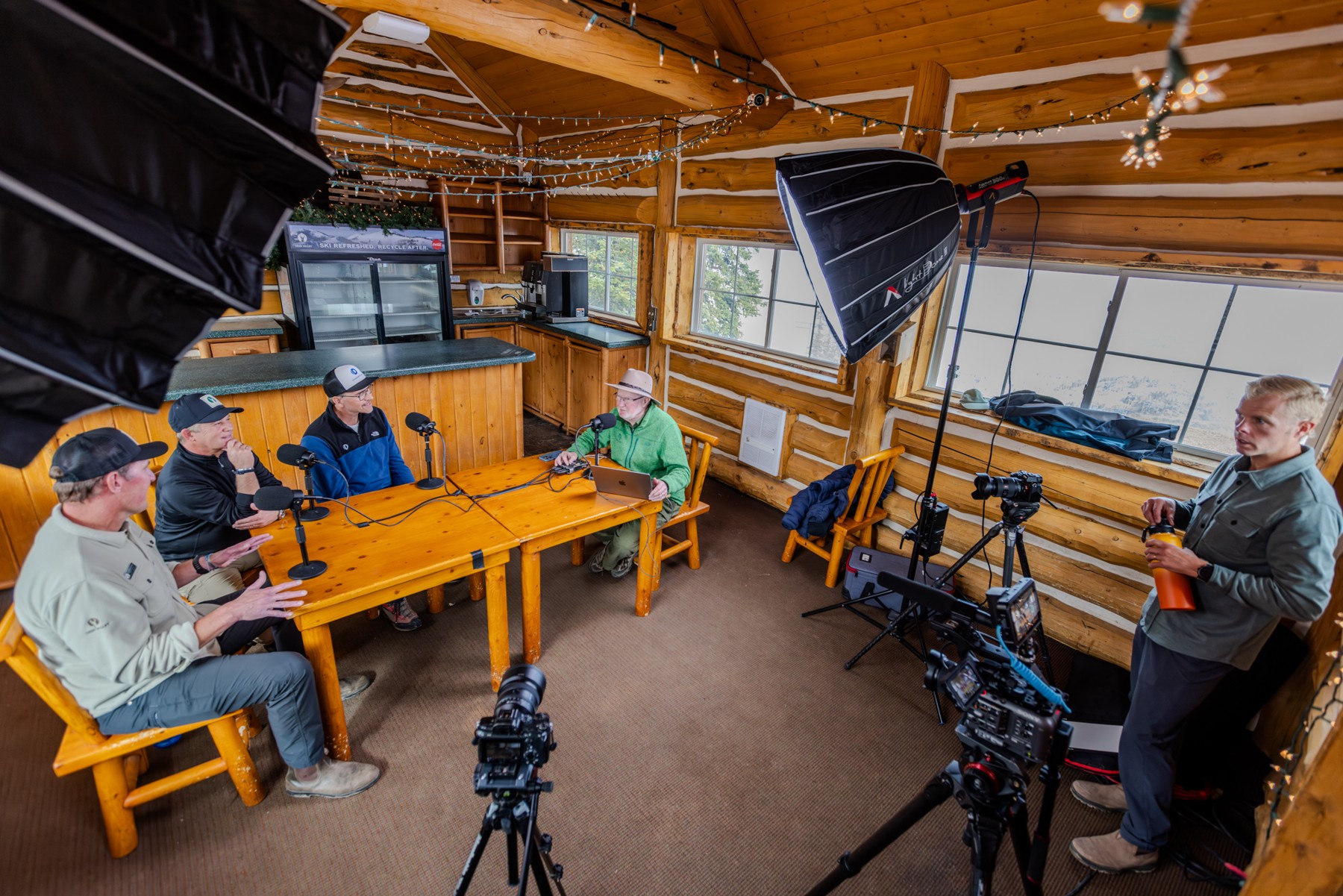



Listen in to the opening season seven episode of Last Chair, recorded high atop Bald Mountain at Snowshoe Tommy’s cabin with Deer Valley mountain operations leaders Steve Graff and Garrett Lang, along with Shawn Marquardt from Doppelmayr ski lifts.
You’ll get insights into the latest in ski lift technology at Deer Valley East Village, some perspective on the scale of the expansion, and some tips on favorite runs you’ll want to check out this winter.
LAST CHAIR PODCAST GOES VISUAL
After six seasons and 81 audio episodes, Ski Utah’s Last Chair, presented by High West podcast, is going full video beginning this season! While each episode will remain available on all audio podcast platforms, a fully produced video program will debut on YouTube and skiutah.com.
The award-winning Last Chair podcast, with host Tom Kelly, tells the inside story of the lifestyle of skiing and snowboarding in Utah. The video broadcast is being produced by Tim Jones. His Utah-based Grit Visual is acclaimed across the Utah ski industry, with such past features as The Last Gunners, documenting the longtime use of artillery for avalanche safety in the Cottonwood Canyons.
Each audio and video podcast will contain the same content, with the video taking viewers deeper inside the stories of the Ski Utah lifestyle.
In addition to Last Chair episodes recorded on-site, the show will also debut its new studio location at Utah’s High West Distillery. Studio guests for Last Chair will now gather in the Whiskey Library at the High West Distillery just outside Park City for shows that will be broadcast both in audio and video podcasts.
S7 Ep1 - Deer Valley - TRANSCRIPT
Tom Kelly: It's a beautiful day here on the top of Bald Mountain. We're in Snowshoe Tommy's cabin, and I am so anxious because in about 5 or 6 weeks, we're going to be back here, and there's going to be snow all around. Right now, we've still got remnants of fall, beautiful colors, and some nice low clouds today. And welcome to season seven of The Last Chair podcast from Ski Utah. It's great to be back. And as you can see, we are now doing a video podcast in addition to the long-standing audio podcast for last year. I have some amazing guests today, and we're going to be talking about the new expansion at Deer Valley, Deer Valley East Village, lots to cover here today. My guests include Steve Graff, the vice president of mountain operations for Deer Valley, Garrett Lang, the senior director of mountain operations for Deer Valley Resort, and Shawn Marquardt, the senior director of sales for Doppelmayr. And he's going to talk about lifts. So folks, welcome. Thanks for joining me here at the top of Bald Mountain today.
Steve Graff: Thank you. Tom.
Tom Kelly: Are you guys getting fired up? I know you're the ones that have to put all this stuff together for all of us who enjoy it, but I imagine, amidst all of the stress of getting ready for the season, you guys at Deer Valley, in particular, you're probably chomping at the bit, right?
Garrett Lang: Yeah. I mean, this is going to be a monumental season. So, you know, there's still a lot to do, but we're super excited and our guests are really going to love it.
Tom Kelly: Yeah, it's going to be fun. We're going to talk more about the opening details and some of the metrics of what you've put in at the Deer Valley, East Village. But Steve, I want to just go to you first and talk a little bit about how… what was the vision and how did East Village come to be? We talked a little bit with your boss, Todd Bennett, Last Chair, along with Gary Barnett from Extell. But you've been at Deer Valley for quite a few years. How did this vision materialize for what is now going to be known as East Village?
Steve Graff: Well, I've been at Deer Valley. This will be my 32nd season coming up. And there's always been talk about Mayflower and Deer Valley Resort expanding to the east. But it wasn't until Extell came on board and offered up a lot more terrain that was really game-changing, and it started to become a reality. You know, the early talks about going east. There was nothing more, beyond Big Dutch, that was about as high up the mountain it went. And with Extell's purchasing of all the lands and our subsequent leasing of that … it's game-changing to have that many acres added on.
Tom Kelly: Have you in your years here, have you kind of made some sojourns back into that backcountry terrain as it was at the time?
Steve Graff: Yeah. I've, uh, I've been a skier my whole life. So, sojourns are part of that journey. And, uh, some of them were official. I spent, you know, 20 years or so on the ski patrol. And they're occasionally over the years, people would leave our boundaries, and one of the duties of ski patrol is to go track them down and find them and get them back. And so I was able to go out in the train and being able to see the train from existing Deer Valley over the years, it's incredibly exciting to have it be part of the resort now.
Tom Kelly: Yeah. Did you in the in the design of it over the last few years, from your experience and kind of wandering around there a bit did you … were you able to maybe lend some hints and tips and thoughts as to where we could build some runs?
Steve Graff: Yeah, I remember distinctly skiing around with Chris Cushing, and it probably had to be somewhere in the 7 to 10 years ago. And, you know, the talk was happening, but nothing had been finalized yet. And Extell wasn't even on board at that time. And I believe, we looked at all the different drainages in Glencoe and Pocatello, and McHenry, and skied around the existing Deer Valley Mayflower Sultan area. And we're looking at those areas. And, speaking with him and getting his incredible amount of knowledge and ski area design about what could potentially be in that area.
Tom Kelly: Shawn, I want to go to you. Doppelmayr is one of the leading lift manufacturers in the world. You have installations all over the world, and I've been on some of your lifts in Austria, places like Sölden and Saalbach, and others. We're going to get into the nitty-gritty in a little bit. But give us a little introduction to your company, Doppelmayr, and we'll talk a little bit more in a bit about all of the lifts that you're putting in.
Shawn Marquardt: Okay. Well thanks. So Doppelmayr is a global company. We're headquartered in western Austria, but our US headquarters is right here in Salt Lake. And we've been here about 40 years. What makes our headquarters here unique is that we also do production. So we produce our equipment at just a few places around the world. One is Salt Lake City, one is Quebec, Canada, and then, of course, in Austria. So for us, it's extremely exciting to have this in our backyard, and such just the enormous volume of work all in one place in a short amount of time is really exciting.
Tom Kelly: I imagine it's been nice for you because you're doing installations all over the US, Canada as well, that you can just kind of drive from home and be here at Deer Valley and be up and working and helping, you know, look over the lift installation.
Shawn Marquardt: That's right. No stoplights from my house right up the freeway and onto Highway 40. I just love it. New parking area is great. And the new lift infrastructure is really exciting.
Tom Kelly: Let's talk a little bit about the expansion here. And I'm going to go to you next. And, you teased us out last year with a number of runs in three lifts. But give us a little bit of the rundown of this expansion at Deer Valley.
Garrett Lang: Yeah. So for this year, Deer Valley traditionally has been 2026 acres. We're going to jump up to over 4300 acres. So we instantly double. We opened as a teaser last year three of the new lifts in the expansion, but we're going to open seven additional lifts this year, including the two-stage gondola. So it's a massive amount of terrain. It's a massive amount of uphill capacity. I mean, the runs are amazing, the views are amazing. It's an extremely well put-together product.
Tom Kelly: A couple of years ago, we had a press conference here at Deer Valley Resort and talked about this and really, for the first time, told the public the skiers about what was going to be here. And what really struck me was the amount of the expansion, you know, you went and you're going to have to give me the numbers, but a couple thousand acres now, adding really almost tripling the terrain when this is fully built out.
Garrett Lang: Yeah. I mean, 2000 acres to 4300. There's still a few acres out there in the bank for the future, if we'd like to. 103 runs at traditional Deer Valley. We're going to over 200 runs now. One of the coolest things I've ever been a part of is naming those runs. Pretty much all of them are named after mining claims. Yeah, it's, I mean, it's just been an incredible experience, and we're so excited to share that with our guests.
Tom Kelly: Let's talk a little bit about that naming experience. And of course, there's a great heritage of mining here in Park City. That's where our community got its roots back in the 19th century. So did did you get to dig in and do a little bit of research and learn a little history of the mining culture we have here in town?
Garrett Lang: Yeah, I mean, the mining culture is huge in Park City. We all know that. And we have a local historian on our staff that actually put together a list of over 500 mining claims. And then a small group of us sat in a room with the map and kind of purposefully decided what to name what. So there's some backstory behind some of those runs, which is kind of fun. For instance, there's one run that we really think should have snowmaking, but it's not going to have it as of now. It's called Overlooked. So look for Overlooked.
Tom Kelly: I love this. Any other Easter eggs hidden out there that we might want to know about? Steve. You got some thoughts on that? You're well experienced with the terrain back there?
Steve Graff: Yeah, there's a there's a few Easter eggs out there with the naming. You know, spending time in the terrain before we got to the naming was incredibly helpful. The run Pay Rock, for example, there's a huge rock outcropping at the bottom. So when you're scrolling through all of these different mine claims, and Pay Rock showed up. It was like, I know exactly where that needs to go. And all the runs off of Keetley are named after water and lake. So, Lady of the Lake. Lakeshore. Sure thing. Because the lake is the prominent view, and Keetley itself is named after the town that's right across the highway underneath the lake that was flooded when the Jordanelle Reservoir was created.
Tom Kelly: Steve, when did you first come to the area?
Steve Graff: I first came to Deer Valley.
Tom Kelly: To the community. Like, were you here before the Jordanelle Reservoir existed?
Steve Graff: No. I started working at Deer Valley as the Jordanelle Reservoir was being filled.
Tom Kelly: Okay. So then I hold the distinction of actually having been here, and I actually have been through the town of Keetley. For those of you, that know, US 40 that connects Park City down to Heber City. It's right up on this kind of high line, right at the base of the mountain, going by the East Village. It used to be down where the reservoir was, and there was a little town of Keetley, and all the ore came out of the mines. So it's awesome that you're upholding that tradition.
Steve Graff: Yes. We're so excited to do it. And, uh, the naming for me as well was one of the coolest things I've ever done in my career.
Tom Kelly: Can you guys highlight and maybe start with you, Garrett? Highlight some of the key lifts that we're going to need to get to know this winter over on the East Village.
Garrett Lang: Well, the East Village gondola is going to be the premier out-of-base lift for sure. That's a Doppelmayr D-Line, ten passenger, 3000 pp. I think 1400 feet per minute. So that's a massive lift. That'll get you instantly from a little bit over 5000ft all the way to 9000ft. So you're instantly going to high alpine terrain. And then I think the other one I would call out is Revelator Express. That is a Doppelmayr that gets you directly to the top of Park Peak. The views up there are amazing. That's the beginning of the run called Redemption, which is a ridgeline run. It's going to be like Stein's way on steroids, is kind of what we like to say. So those are two lifts that really stand out. I guess another one I would mention is Pinyon Express. That's another D-Line six-passenger bubble, similar to the Keetley express that we opened last year. That's going to be great for beginners and kids, because they're going to be able to just circulate in high mountain, high alpine terrain on greens and blues. Beautiful views. It's going to be an amazing experience.
Tom Kelly: To give skiers who maybe veterans here at Deer Valley, and they totally understand the infrastructure with Bald Mountain and Flagstaff, and Empire, and so forth. Talk about the connecting point from the existing mountain over to East Village without having to go around to the other base.
Garrett Lang: Yeah, I mean, it's really interconnected. So the bottom of Pinyon Express, which I just mentioned, is off of Ontario, which is kind of an arterial run here at Deer Valley. So you can instantly get from Flagstaff Empire, Lady Morgan into the expansion from Silver Lake. You ski all the way down McHenry or the Sultan Connect, and you're in the expansion.
Tom Kelly: We're sitting here right now at Snowshoe Tommy's, which is at the top of Bald Mountain. Out our window there's the top terminal of Sterling and also of Wasatch and Sultan. So from right here, if I get myself to the top of Bald Mountain, it's just a little run down to get into the new terrain, right?
Garrett Lang: Yep. You start on Homeward Bound, go down Northern Light. You're in the expansion.
Tom Kelly: Wow. That's the one thing that struck me last year is just how easy it was and how well-integrated it was to the existing terrain.
Garrett Lang: Yeah, I think that's one of the special things about this. It's not as if it's two separate resorts. It is so interconnected. It's seamless. So it's just one big Deer Valley. It's the same aesthetic. It's the same level of guest experience. It's just Deer Valley.
Tom Kelly: Shawn, I want to go to you. And Derek threw out some terms like D-Line and a few others. Doppelmayr is really showcasing some of its really advanced technology here at Deer Valley. Right.
Shawn Marquardt: That's right. Yeah. We. So of all the projects here at the expansion, uh, it's made up of a few different elements out of our product catalog, starting from the most basic of four-seater, fixed-grip chairlift. And then there are six new high-speed four-seater chairlifts. And then when we get into the really new and state-of-the-art things, we have the two six-seaters that Garrett mentioned and the two-section gondola, which is a ten-seater cabin.
Tom Kelly: Talk to me a little bit more about what D-Line is. I know that the, uh, the East Village Express is a D-Line lift. What exactly is that? And what are skiers going to notice in their ride up that lift?
Shawn Marquardt: Well, so D-Line in the in the mid 20 teens at Doppelmayr we undertook uh basically from scratch blank slate, everything we learned about high speed lifts over the last 2 or 3 decades, and started over and said, now we know we've built hundreds of these things. What would we change? What would we do different? And so it's really everything about the lift. If you really get into it and you're a lift nerd like I am, the terminals are different, the chairs are different. The towers, everything about it, the grip and what the key points behind it are guests, comfort. So things like wider seats, something simple like that all the way through to the suspension, on the towers and on the carriers. So the guests will notice really smooth ride, faster ride and really quiet the stations and passing over towers. It's just it's a really quiet and enjoyable experience.
Tom Kelly: Skis outside or inside.
Shawn Marquardt: On the cabin. The skis will be outside.
Tom Kelly: They will be. I rode a lift similar to this over in Zurs a couple of years ago in Austria, and what really struck me was just the comfort, the smoothness that you mentioned. How do you accomplish that?
Shawn Marquardt: Well, it's a lot of there. There's a lot of dampening extra rubber and, uh, sandwich steel elements all throughout the system, and we can get into all sorts of details. But really, the whole interface of how the rope glides over the towers and how the grips glide over the towers and how they interact in the stations as well.
Tom Kelly: Let's talk about the process of building this. We're going to have Chris Cushing from the SE Group on the podcast coming up in the middle of November, and I know that he's going to talk about this. He was the one whose company helped to put this together. His father actually helped design the original Deer Valley. But what is the overall process, and what role does dopamine play in that, and kind of putting all the pieces together?
Shawn Marquardt: Well, Chris, his company, the SE Group, they … we work with them on a vast majority of all the projects all around the US. So what happens is a company like Crystal. First, do the initial feasibility and study of where they want the skier flow to be and where the guests ought to flow through. And once they've done that, we get a terrain file from them, a profile of the actual ground terrain. And our engineers look at that and we lay out the rope line, figure out where towers make the most sense for efficient, smooth ride as well as, you know, optimal loading over the towers. So once we have that, we know what equipment needs to go into the project, we can start to form out the bill of materials and all the parts and pieces that need to go into each project.
Tom Kelly: In this process, Steve, I'll go to you first. Did you have the opportunity to kind of go and look at other lifts around the country and around the world and help make those decisions on what's going to work best here at Deer Valley?
Steve Graff: Yeah, I've you know, I've been a lifelong skier and I've had the opportunity, uh, to go with Doppelmayr and see their facility in Austria and see a number of their installations in Austria and Switzerland. So when we're talking about the different types of lifts that are available and what would be appropriate for the terrain, having that background and that knowledge of actually experiencing those lifts was incredibly helpful.
Tom Kelly: We're going to take a quick break, and when we come back, we're going to talk helicopters. And we've all been buzzing here in Park City watching these lifts go in all summer. We'll be right back on Last Chair.
Tom Kelly: We're back on Last chair. We're coming to you from Snowshoe Tommy's high atop Bald Mountain here at Deer Valley Resort. Beautiful fall day, and we're counting down the days. It's about five weeks till the opener coming up the last weekend of November. If you have a Deer Valley season pass. Otherwise, Monday, December 1st will be back out here. Steve, we've talked a lot about what's going in at East Village this year, what we're going to be able to ski, what we're going to be able to do. But there's also a few more things coming out in the future.
Steve Graff: Yes. So, this coming season, we have a new temporary facility that will be there for two years. It's an 8000 square foot sprung structure, and it'll have retail, skier services, desk rentals, ski storage, and a restaurant.
Tom Kelly: And then as we look forward, and you've got another lift coming in another year or two, don't you?
Steve Graff: Yeah. The expansion's not quite done yet. There's still, like Garrett said, we still have about 1500 acres, to add on. And the next one and the final one that we have planned at this date is Hale Peak Express. It'll come on next year. So we'll be building one more lift next summer. It'll seem like a slow summer compared to what we've been doing.
Tom Kelly: So our Deer Valley regulars have started to become familiar with Big Dutch and with Park Peaks. And now we have to learn Hale Peak, and that's just a bit to the south, right on.
Steve Graff: Hale Peak is actually east of Big Dutch.
Tom Kelly: Okay. So we'll be just like last year. We're looking up at these amazing runs coming off this spine. So this year we're going to be looking just a little bit further down the ridgeline and be thinking about, oh, I get to do that in another year or so. Right.
Steve Graff: Exactly. So right now, when you unload the East Village gondola at the mid station, you're going to have access to all the big Dutch terrain, which is incredible terrain. There's a lot of low-angle intermediates similar to the terrain on Flagstaff on Northside. And from there, you get direct views of Hale Peak. So while you're skiing the present this year, you'll be able to see the future as well.
Tom Kelly: Now for for those who want a nice dining experience at lunch, you're going to be able to still go down to the Grand Hyatt. And that was a popular attraction last year. And again, easy access and easy backup, right?
Steve Graff: That's correct. You can eat at the Grand Hyatt this winter, and you'll also be able to eat at the East Village temporary facility, as well.
Tom Kelly: Beautiful. Garrett, let's talk helicopters. I'm just curious in your past. I know you guys were flying all summer long here. It was so fun to watch. Did you have any past experience in operations like this? And lift installation?
Garrett Lang: No. This was really my first experience. You know, seeing all these lifts being installed, we've installed a few over the last ten years here at Deer Valley, but being really directly a part of it, this was the first time.
Tom Kelly: Who was … who conceived this amazing idea of inviting the community out for a Saturday or Sunday morning to come up to the top of Bald Mountain and watch the choppers fly?
Garrett Lang: You know, I think that goes to our president, Todd Bennett.
Tom Kelly: But I got to tell you, as a community member, it was so cool to come up there and just socialize with friends, sit there and enjoy a beautiful day, and just see the action out there. So thank you.
Garrett Lang: Yeah. For sure. I mean, Steve and I were up there, and our hi-vis vests and hard hats so people could come ask us questions. It was amazing, the turnout. And, you know, I think it really was a good vibe. It was a lot of energy and we're getting people excited about it as they should be.
Tom Kelly: Shawn, from the lift company's perspective at Doppelmayr, I know you guys do this all the time all over the world, but what goes into this operation? It's not just a helicopter showing up and picking stuff up. There's a whole process, right?
Shawn Marquardt: Yeah, well, it's even at the very earliest stages, our engineers, when we're engineering the towers, each tower element has to be designed so that it meets a weight that's pickable. And so that … what was really exciting here and that first public fly day was the Chinook. So when we have to hire a Chinook, that's a big deal for us. Big heavy, heavy payloads, the big dual rotor ship flying around out there. That's pretty exciting. And then on typical fly events where we can, where the loads are a little bit lighter, we generally use a Blackhawk.
Tom Kelly: Let's go back to that Chinook because that was super impressive. Is a helicopter that big typically used in lift … hauling lifts up?
Shawn Marquardt: Not typical. Not typical. We've over just in the past couple of years where we've some of the equipment on the big D-Line ten-seater gondola where the towers are really tall, big heavy pieces. We've started to use the Chinook just in the last two and three years.
Tom Kelly: Garrett, when you're working on the operational side from Deer Valley. What's the communication that you have going with the choppers as they're bringing those towers into place?
Garrett Lang: So a lot of it is done prior. There are very strict flight paths, and we know where anybody may be working or not working to keep everyone safe. So it's really a detailed procedure. And I guess just one aside on the Chinook, if you happen to be up there, Tom, or if anybody else that's listening, they actually deviated from the flight path during that day and did a total Maverick move, swooped in towards Bald Mountain, towards the crowd, and did a sweeping turn. It was it was a classic Maverick move.
Tom Kelly: Yeah, I didn't see that. But that's the kind of stuff that we love to see. Right. And I know you guys were excited, too. Yeah. So do you, Shawn, as you have you had the opportunity to be on site for a lot of these helicopter installations?
Shawn Marquardt: Well, they're becoming more popular. So, like what Deer Valley did, where we, you know, they get turned into an actual show event or a community event. That's pretty exciting. So I, yes, I've been to a handful. The last one here in Park City, I remember, was when we built the lift at the Olympic Park a couple of years ago, and they did a similar thing with coffee and donuts, and it was just a great day.
Tom Kelly: Yeah, it's a great experience. We're going to take another short show break. And, uh, Steve, I think you and I, we're going to walk outside and show people a little bit about what's going on at East Village, and then we'll come back in here to Snowshoe Tommy’s. We'll be right back here on Last Chair, the Ski Utah podcast.
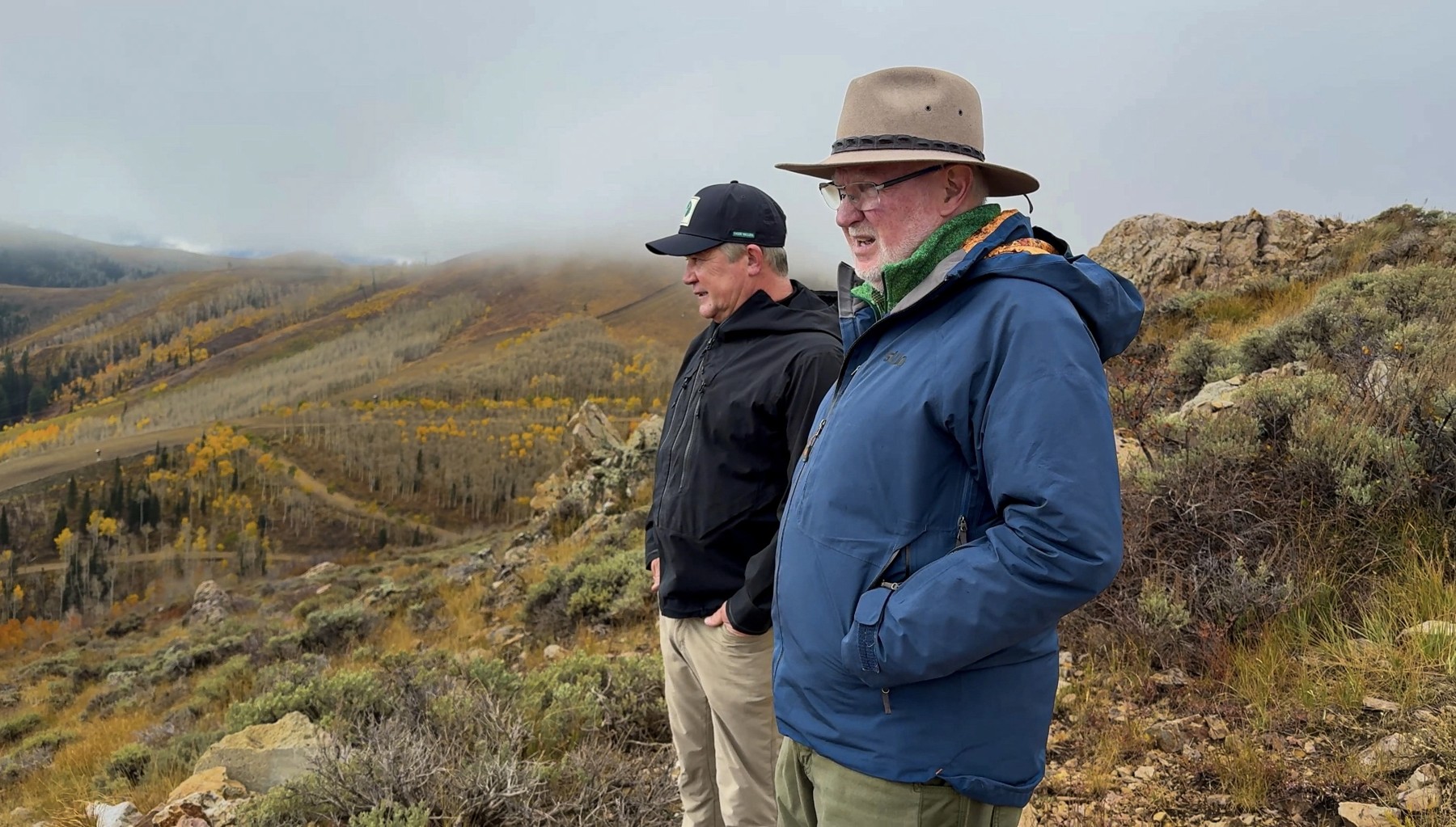
Tom Kelly: It's a beautiful day. If you're a skier. Look at these clouds coming in. For those that know the lay of the land, we're right alongside of Stein's way off of Bald Mountain. And we're going to take a look here. Steve Graff, beautiful landscape. We've got the Jordanelle Reservoir right below us.
Steve Graff: Yeah, that's the Jordanelle Reservoir. And then the first peak we're seeing is Hale Peak. We're going to put a lift in there next year. The next one with the mid-station of our gondola is Big Dutch, and all that terrain is accessible off of the mid-station of the gondola. And then to our right is the top of the gondola and Park Peak.
Tom Kelly: And that's the one shrouded in the clouds right now.
Steve Graff: Clouds?
Tom Kelly: Yes. A lot of terrain out here. And one of the things I wanted to talk about is the snowmaking. You have amazing snowmaking coverage here.
Steve Graff: We have a state-of-the-art snowmaking facility. We have a hail peak maintenance facility that is going to house our pump house. We're able to pump 10,000 gallons a minute, and that water and air is directed to over 1100 HKD stick guns, low energy guns, and 150 fans.
Tom Kelly: I want to clarify that 1100 HKD stick guns.
Steve Graff: Yes. That's correct. Yes.
Tom Kelly: You know, we saw some of those last year, and I'm kind of curious. You've got the HKD stick guns and you've got the Techno Alpine fan guns. How do you decide where you're going to put those on the hill?
Steve Graff: All the stick guns are usually on narrower trails. And the fan guns we're using where we need more throw and a little bit more distance.
Tom Kelly: And for those of our listeners and viewers who maybe were snow makers 20, 30 years ago, it's a little bit easier these days, isn't it?
Steve Graff: Yeah. Our system is largely automated, and where we're really going to save is when we fire up and shut down. That literally, you could do it from your phone or computer. Turn one gun, then the next, then the next, then the next. All like that instead of the old way, hiking from one gun to the next. To turn them on. So we'll be able to fire up the entire system in a matter of minutes.
Tom Kelly: We talked earlier about the Deer Valley East Village gondola. It's going to start down at the base, which we can't quite see right now. Come to the top of Big Dutch and then all the way up to Park Peak. Tell us a little bit more about that Doppelmayr lift.
Steve Graff: It's a Doppelmayr D-Line ten-passenger gondola. One of the most modern gondolas in North America right now. And it comes up to the Mid-station, which is going to have grade skiing, and then goes all the way. Each segment is going to be about 7.5 minutes, so the total ride will be about 15 minutes.
Tom Kelly: Just as we wrap it up, and before we go back inside Snowshoe Tommy’s. Any secret stashes you want to tell our viewers about?
Steve Graff: I'm incredibly excited about this terrain right in front of us here, Tom. This is going to be all accessed from Revelator Express. A lot of great tree skiing, some steep open bowls. It's going to be truly spectacular.
Tom Kelly: Steve, thanks for the tour. We're going to go back inside Snowshoe Tommy’s on this episode of Last Chair.
Tom Kelly: Welcome back to Last Chair. Welcome back inside Snowshoe Tommy’s. Steve, thanks for the little tour out there, boy. What an interesting day with the clouds coming in and out today, but, I want to close it out here and talk about, uh, something that I know is very important to Deer Valley. It's important to all resorts. And that is the guest experience. And, Garrett and Steve to you, what does the guest experience mean? And how is what we see with Deer Valley East Village really going to play into the offerings that Deer Valley is known for?
Steve Graff: The guest experience is so important to Deer Valley. It's our founder's vision. I think this … all of this expanded excellence in this terrain expansion, part of that is, is about bringing our past into the future. So, the things that have made Deer Valley great in the past, how do we recreate that with this expansion? And we think about it every step of the way?
Tom Kelly: Garrett, how about you? What does this mean to you, and what you provide to the guests up on the mountain?
Garrett Lang: I mean, like Steve said, it's really just an extension of our past, and that's very important to us. I mean, attention to detail, genuine care. None of us are above stopping to help a guest picking up a piece of litter. You know, we just want the experience to be so high-end for our guests that they can continue to come back year after year. You know, different generations. It's kind of in our DNA.
Tom Kelly: Shawn, you're the lift manufacturer, and it's easy to look at you as a company that as engineering and operations and puts metal pieces together. But how does it all translate for you at Doppelmayr to what the guests, all of us skiers, experience here at Deer Valley?
Shawn Marquardt: Well, absolutely. Our ultimate goal is we want the skiers to know when they're skiing at a resort that, oh, that was a Doppelmayr lift. And it's really the touch point. I think the guests will notice, especially on the new D-Line systems on Keetley and Pinyon, and the gondola with bubble enclosures for weather, heated seats, and the smooth, comfortable ride. I think that will enhance the experience.
Tom Kelly: You had me at the heated seats. I still don't understand how that works, but it is nice. So, I want to thank you guys for joining us here at the top of Deer Valley. We're looking forward to the season, which is just about five weeks away here. I want to close it out with our fresh track section and a few questions for each of you. Just to wrap things up. First of all, kind of think back over the course of the summer, and you guys have all been through an amazing machination of operations and flying lift towers and so forth, so forth. Was there a point this summer where you looked at something? And Garrett, I'm looking at you first here. Is there a point where you looked at something and said, huh? Wow, that really worked out better than I thought. What do you think, Garrett?
Garrett Lang: Oh, boy. I think I'm just going to go to yesterday. And the amount of pipe that was not in the trench. When I was out there on Monday, and, you know, I did a tour yesterday, and it was all put to bed. Guns were in place. It's amazing how quickly we're moving and getting this put together.
Tom Kelly: Shawn, how about you? Something that you looked at this summer, and you said, wow, that…. Hey, that worked out pretty well.
Shawn Marquardt: Well, there are so many things, so it's hard to pick one, but just the sheer volume of truckloads of equipment coming in and then first getting staged in the parking lot and then moving up the mountain. I think we filled and emptied our staging area at least four times, and it just builds up truckload after truckload, then goes down as the stuff gets trucked up the mountain and put in place. And I think it's just an example of everything having to come together. And so far it is. And we're really excited to wrap this all up and be skiing.
Tom Kelly: I have to say, it's fun to go by those staging areas in the parking lots down below during the summer and try to figure out how is this jigsaw puzzle going to come together. Steve's something that you said, hey, that really worked out well.
Steve Graff: You know, looking back here, you know, mid to late October, and looking back at the summer, just the scale and speed of what we've been able to accomplish. I can't think of one thing, but all of it together like this is incredible.
Tom Kelly: Okay. To each of you now, when this thing is up and operating, and you're hoping to get this rolling out by what, mid-December ish, mid to late December.
Steve Graff: Mid to late December is our target.
Tom Kelly: Okay. So when you get out there in mid-December, what's that one run that you really want to get on, Garrett?
Garrett Lang: Redemption. I mentioned it earlier. That is the iconic ridgeline run. Everyone is going to want to ski that. A few years ago, I was out on a marketing shoot, and we did a sunrise ski of that run, and it is just amazing. That is going to be a magnet for our skiers.
Tom Kelly: Okay. Redemption. Steve.
Steve Graff: I'm going to say, Persistence is another ridgeline run. It goes down to the bottom of Vulcan. It's got a great pitch. It's going to be advanced, intermediate, and we're planning on grooming it nightly. So that's going to be a fun one as well.
Tom Kelly: You guys have a trail map ready right?
Steve Graff: So it's we'll have a trail map.
Tom Kelly: So we're going to, we're going to okay. I say that because we're going to put the trail map in the show notes, and hopefully it'll be ready. So you can kind of find your way around. Shawn, what's your run going to be?
Shawn Marquardt: Well, you have me at a loss because I don't know all the run names yet. These guys have us beat, but I'm excited to ride and ski everything off of Revelator. That looks just fantastic. And that's going to be kind of a repeat of all this Wasatch salt and terrain. And I think it's going to be pretty special.
Tom Kelly: Yeah, I think that that Revelator is going to be fun just watching it go in and kind of imagining what the terrain is like there. Okay, last question. This is always the hardest one, but I want you to kind of sum up what Deer Valley East Village means to you. But you only have one word, Shawn. I'm going to go to you first. One word, Deer Valley, East village.
Shawn Marquardt: Okay, I thought about this. My word is enduring, and it's it's because the first time I looked at this expansion is well over five years ago. You know, first laying out these lifts and doing pre-engineering and then finally building them, but then really looking forward. I mean, one thing we don't talk a lot about, but this is real infrastructure that it will be here for decades. And so these difficult couple of summers, when we look back in 20 and 30 years, I think it will be an enduring experience and I'm really happy to be a part of it.
Tom Kelly: That kind of popped another question in my mind. But do you ever think … I know you do because you work for Doppelmayr, but what are lifts going to look like in 20 or 30 years?
Shawn Marquardt: Ooh, teleportation.
Tom Kelly: I love that.
Tom Kelly: I love that! Okay, sign me up for that. I'll be 90, but that's okay. Garrett. One word.
Garrett Lang: I would say lifetime as my one word, because this is a once-in-a-lifetime experience to be a part of this project. There's so many people involved, and everyone is driving towards the same goal, and we're going to get there, and it's going to be a Deer Valley level.
Tom Kelly: Beautiful. You get the last word, Steve. But it can only be one.
Steve Graff: One word. Evolution.
Tom Kelly: Love that one.
Steve Graff: Yeah. And I, as I've thought about it, that the East Village and our terrain expansion is just another evolution of Deer Valley, and we're taking those founding principles with us and evolving it into something twice as big and great. It's going to be very exciting.
Tom Kelly: You know, when you've lived through many of those, the Flagstaff evolution, the Empire evolution, now East Village, right?
Steve Graff: Correct.
Tom Kelly: Well, I want to thank you guys for taking the time. I know that you're in the peak final days of construction to get this open at the end of November. But thank you for joining us on Last Chair. And I know that all of our skiers and listeners, and viewers of Last Chair, thank you for your information, and we'll see you on the slopes this winter.
Steve Graff: Great.
Shawn Marquardt: Thanks, Tom.
Tom Kelly: Thanks for joining us here on season seven of Last Chair as we kick it off here at Deer Valley Resort.