Utah’s mountains are beautiful, that is no secret. And our snow…well it’s called The Greatest Snow on Earth® for a reason. Yet that doesn’t mean our mountains or snow is harmless, just as with any adventure there is always a certain level of risk involved.
Our snowpack here in Utah is complex, our terrain is steep, and when things go wrong in the winter backcountry, they tend to go wrong fast. That’s reality for anyone who’s spent time outside the ropes in the Wasatch, Uintas or La Sals. This isn’t about trying to scare you, just the opposite, it’s about empowering you to enjoy the backcountry and snow more fully.
Which is exactly why beacon parks exist.
If you’ve ever seen a small sign near a trailhead that mentions “Beacon Basin” or “Avalanche Training Park” and wondered if it was worth stopping…this is your answer.
What Is a Beacon Park?
A beacon park is a dedicated practice area where skiers, snowboarders, hikers, fatbikers and snowmobilers can train with avalanche transceivers, probes, and shovels in a realistic, but controlled, environment.
These aren’t toys, they are professional-grade training systems designed to simulate real avalanche burial scenarios without putting anyone at risk.
Beacon parks allow you to practice:
- Transceiver signal search and fine search
- Probing accuracy and efficiency
- Decision-making under time pressure
- Multiple burial scenarios
- Full companion rescue workflows
All before you ever need those skills for real. And in Utah, where the snowpack often produces persistent weak layers and high-consequence avalanche terrain, those skills matter.
Why Beacon Practice Matters in Utah
Avalanche rescue skills are perishable.
Most of us spend summer and fall trail running, biking, climbing, or chasing kids and dogs around. When winter hits, it’s easy to strap on skis and assume last year’s muscle memory will show up when needed. (Spoiler alert, it won’t!)
Statistics consistently show that survival rates drop sharply after the first 15–35 minutes of burial. That window closes faster than most people realize, especially when stress, cold, and adrenaline take over.
Beacon parks exist to help you:
- Shake off the summer rust
- Rebuild muscle memory
- Learn how you respond under pressure
- Make rescue movements automatic, not theoretical.
When minutes matter, thinking less and acting better is everything.
Where to Find Beacon Parks in Utah
Utah has one of the most robust beacon park networks in the country, supported by the Utah Avalanche Center, local search and rescue teams, resorts, and community partners.
Utah Avalanche Center: Managed Beacon Parks
These parks are typically free to use and located near popular backcountry access points.
-
Pinebrook Beacon Training Park (Park City – Wasatch Back)
A rare neighborhood-integrated training park that makes regular practice easy and accessible. -
Nobletts Beacon Training Park (Western Uintas)
A key training site for snowmobilers and riders accessing large, remote terrain. -
Franklin Basin Beacon Park (Logan Canyon)
Serves northern Utah and Utah State University students. -
Geyser Pass Beacon Park (La Sal Mountains near Moab)
A high-elevation, remote training ground for southern Utah’s desert-alpine users. Access is seasonal due to road closures.
Resort-Based Beacon Training Centers
Many Utah ski resorts host beacon parks, often in partnership with Wasatch Backcountry Rescue, and some are accessible without a lift ticket.
-
Snowbird Rescue Training Center
Located near the Batch Plant Lot and free to the public. A major hub for community avalanche education. -
Park City Mountain Training Park
Integrated into resort terrain; lift access typically required. -
Solitude Mountain Resort Beacon Training Center
Located near the Summit Express area, designed for intermediate to expert riders. -
Snowbasin Resort Beacon Park
Check with ski patrol for access and programming.
These parks bridge the gap between resort skiing and backcountry responsibility.
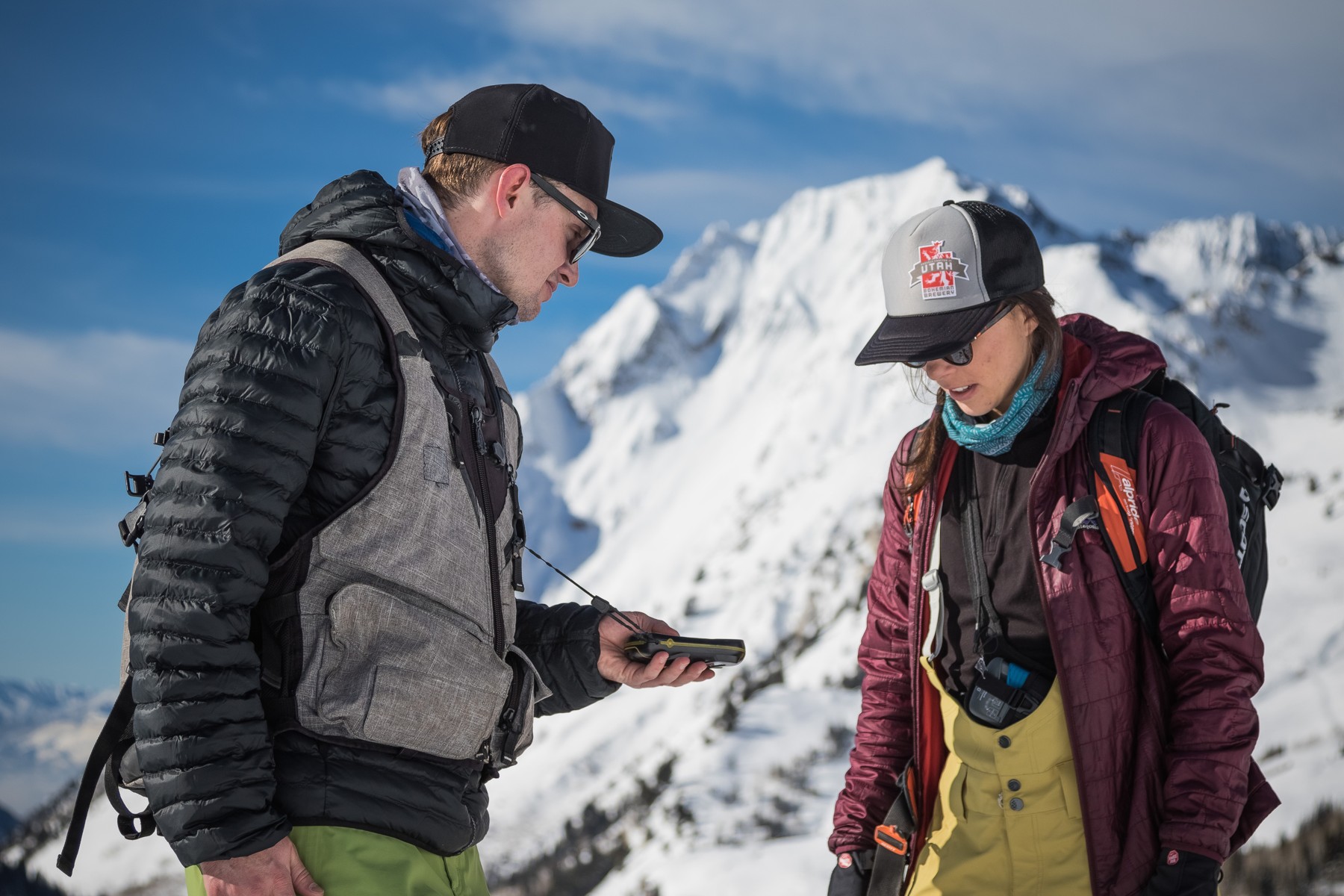
How Beacon Parks Actually Work
Most Utah beacon parks use wireless training systems that allow multiple burial scenarios without disturbing the snowpack.
Here’s what’s happening under your feet:
- Buried transmitters emit a standard 457 kHz signal
- A central control box activates targets and tracks time
- Strike plates confirm accurate probing
- Difficulty levels range from single burial to complex multiple-victim scenarios
There are no visual clues, no footprints, and no shovel holes to give it away. Mimicking the conditions you’d find right after a real avalanche.
The Rescue Triad: What You Practice in a Beacon Park
1. Transceiver Search
Beacon parks reinforce the Run–Walk–Crawl method:
- Run when signals are far
- Walk as distance closes
- Crawl during the fine search
2. Fine Search and Bracketing
You’ll learn how to:
- Keep the beacon close to the snow surface
- Follow flux lines accurately
- Avoid common errors in deep burials
Beacon parks are where sloppy habits show themselves quickly, so that you can address them and improve how you’d show up in a real situation.
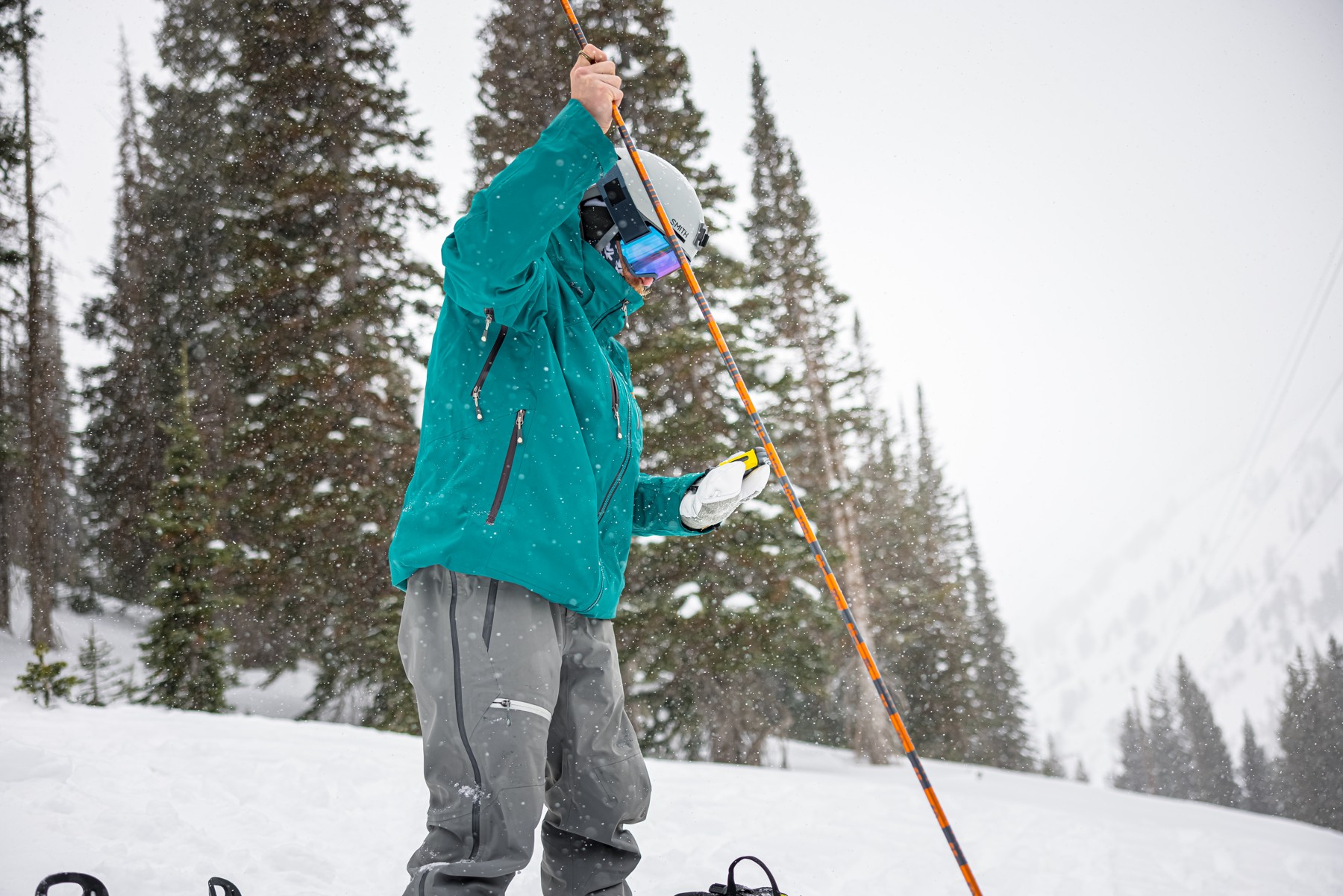
3. Probing (Without Digging Up the Park)
Probing technique is critical:
- Start at the lowest distance reading
- Probe perpendicular to the snow surface
- Use a tight, systematic pattern
Important note: Never dig up park transmitters. For shoveling practice, bury a personal backpack elsewhere.
Beacon Parks and Avalanche Education
Beacon parks are a core component of Utah’s avalanche education ecosystem, and if you have ever taken any avalanche courses, you spent some time at one.
They’re commonly used in:
- Know Before You Go (KBYG) awareness sessions
- AIARE Level 1 and Level 2 training
- Youth avalanche education programs
Instructors often use beacon parks to simulate multiple burial scenarios, forcing students to manage marking functions, communication and leadership under pressure.
The Mental Side of Practice
Here’s the part people don’t talk about enough. Beacon parks don’t just train your hands, they train your mind. Even simulated rescues elevate heart rate and stress hormones. Practicing in such an environment help reduce panic, improve focus, identify gear that works best for you, and build calm decision-making under pressure.
Some instructors even recommend doing jumping jacks before a practice search to simulate fatigue. It’s uncomfortable, but isn’t that the point?
.jpg)
Best Practices for Using Beacon Parks
Before You Practice
- Use fresh alkaline batteries (above 80%).
- Update transceiver firmware.
- Turn off or distance electronics from your beacon.
While You Practice
- Start with single burials.
- Progress to multiple targets.
- Practice clean probing technique.
- Focus on efficiency, not just speed.
After You Practice
- Fully close control box lids.
- Report malfunctions to the Utah Avalanche Center.
- Leave the park better than you found it.
Stewardship applies here too, just as with anywhere in the mountains or backcountry.
Why Beacon Parks Matter
Beacon parks are quiet places, where repetition, discipline, and preparedness can be practiced without fanfare or distractions. They exist so that when the unthinkable happens, your response isn’t panic, it’s practiced movement.
And remember, anytime you head out this winter, take a few minutes to always ensure your beacon is turned on and working. It might just save yours or someones else's life!